

Outdoor furniture looks tough because it lives outside, but it is surprisingly easy to damage in transit. Powder-coated aluminum chips, wicker unravels at the corners, teak scratches, glass tabletops crack and cushions arrive mildewed if they were packed damp. Grills add another layer of difficulty: they are heavy, top-heavy and often connected to a fuel source that carriers treat very carefully.
This guide covers how to prepare and pack patio sets, outdoor sectionals, umbrellas, fire pits and grills, when parcel works and when freight is the better choice, how to handle propane and charcoal safely, and how to make delivery day go smoothly.
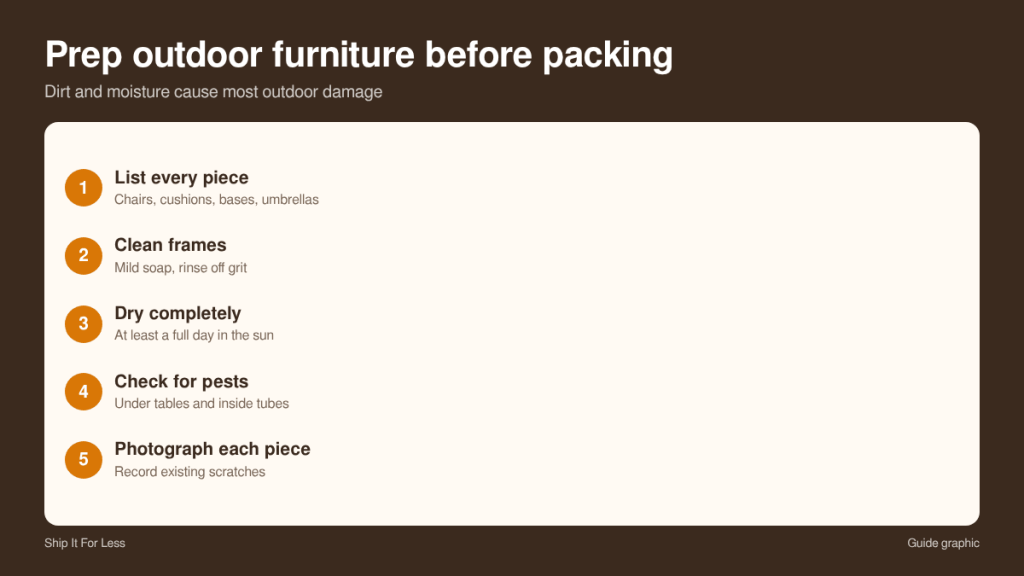
Start with an inventory and cleaning
Outdoor pieces collect dirt, pollen, spiders, leaves and moisture. All of that becomes a problem when it is sealed inside wrap for a week.
- List every piece. Count chairs, tables, ottomans, side tables, cushions, umbrellas and bases. A set of six chairs is easy to miscount once it is wrapped.
- Clean frames and surfaces. Wash with mild soap and water and rinse off grit, which can scratch finishes when pads rub against them.
- Dry everything completely. Let frames, cushions and covers dry in the sun for at least a full day. Packing damp fabric invites mildew and odors.
- Check for pests. Look under tables and inside tubes for wasp nests, spiders or insect eggs, especially if the furniture is moving between states.
- Photograph each piece. Capture existing scratches or fading so you can tell new damage from old.
How to pack patio furniture by material
Aluminum and steel frames
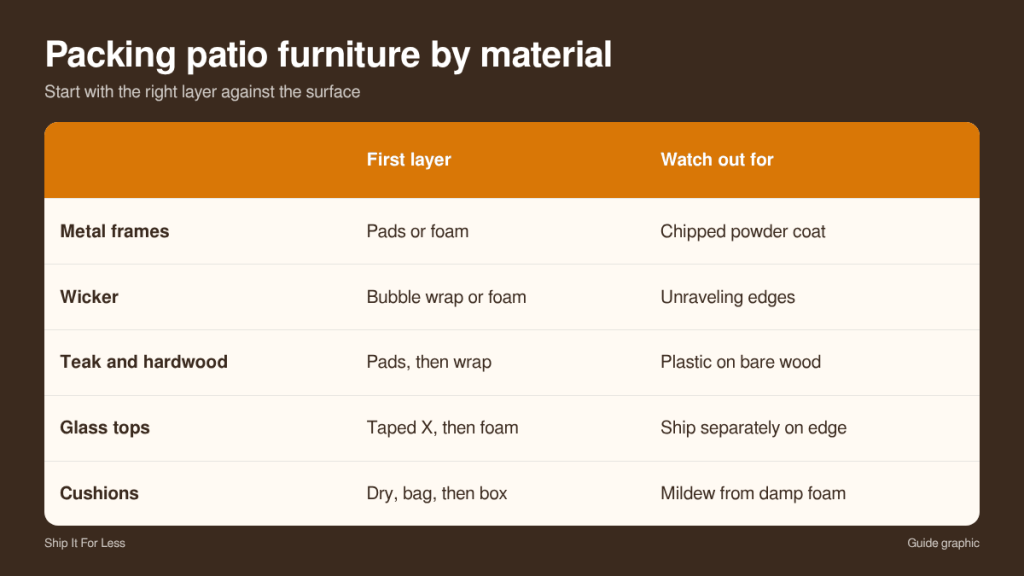
Powder-coated metal chips easily where pieces touch. Wrap each frame in furniture pads or foam, then stretch wrap. Add cardboard corner guards to legs and armrests. Never stack bare metal frames against each other.
Wicker and resin wicker
Wicker is light but fragile at edges and corners. Wrap it in bubble wrap or foam, paying extra attention to woven edges that can snag and unravel. Do not put heavy items on top of wicker pieces in a box or on a pallet.
Teak and other hardwoods
Wood should be padded first, then wrapped, so plastic does not sit directly on the surface and trap moisture. Remove legs from tables if they unbolt, and bag the hardware.
Glass and stone tabletops
Always remove glass tops and ship them separately. Tape an X across the glass to help hold pieces together if it breaks, sandwich it between foam or rigid cardboard, and ship it in a mirror box or wooden crate standing on edge. Stone and concrete tops are heavy and should be crated.
Cushions and covers
Once fully dry, place cushions in large plastic bags or vacuum bags, then in boxes. Cushions are light but bulky, so boxing them separately keeps freight density more predictable than stuffing them around frames.
Umbrellas, fire pits and accessories
- Umbrellas. Close and tie the canopy, wrap it in a sleeve or bubble wrap, and ship it in a long box or bundled with frames on a pallet. Remove the umbrella from its base.
- Umbrella bases. Bases filled with sand or water must be emptied. Heavy cast bases should be boxed with padding or strapped to the pallet so they cannot shift.
- Fire pits and fire tables. Remove lava rock, glass beads or stones and pack them in small, sturdy boxes. Clean out ash. Gas fire tables need the fuel source disconnected and removed.
- Outdoor heaters. Disassemble the reflector and post if possible, and remove any propane tank.
Shipping a grill safely
Propane and gas grills
The single most important rule is to disconnect and remove the propane cylinder. Propane is a regulated hazardous material, and carriers generally restrict or refuse cylinders packed with household goods, even when they seem empty. Do not ship the tank with the grill. Plan to buy or exchange a cylinder at the destination, and ask your carrier about its rules if you have special equipment such as natural gas conversion kits.
- Shut off and disconnect the regulator, then cap or bag the hose end.
- Remove grates, flavorizer bars, warming racks and drip trays. Clean off grease, then wrap and box them.
- Tape or strap the lid closed through stretch wrap, and secure side shelves.
- Remove or wrap the thermometer and knobs, which break easily.
Charcoal grills and smokers
Empty all charcoal and ash and clean the firebox. Remove grates and ash pans. Heavy offset smokers and kamado grills are top-heavy and should be strapped upright to a pallet. Ceramic kamado grills are fragile and should be crated with the lid secured.
Pellet grills
Empty the hopper fully, clean out the firepot, and secure the cord and control panel. Pellets left in the hopper can shift and spill.
Parcel or freight for outdoor furniture
Small, boxed items such as folding chairs, side tables, cushions and umbrellas can often go by parcel if each box stays within carrier limits. FedEx and UPS accept packages up to 150 pounds, up to 108 inches long and up to 165 inches in length plus girth. USPS accepts up to 70 pounds and 130 inches in length plus girth.
Full patio sets, sectionals, dining sets, grills and smokers are usually better as LTL freight. Palletizing a set keeps every piece together on one bill of lading, which reduces the chance of a missing chair.
Palletizing a patio set
- Place the heaviest pieces, such as a grill or table base, on the bottom center of the pallet.
- Stack padded chairs and frames around and on top, with nothing overhanging the pallet edges.
- Fill gaps with boxed cushions to stop movement.
- Stretch wrap the entire load several times around, then strap it to the pallet.
- Mark “Do Not Stack” on top if the load is fragile.
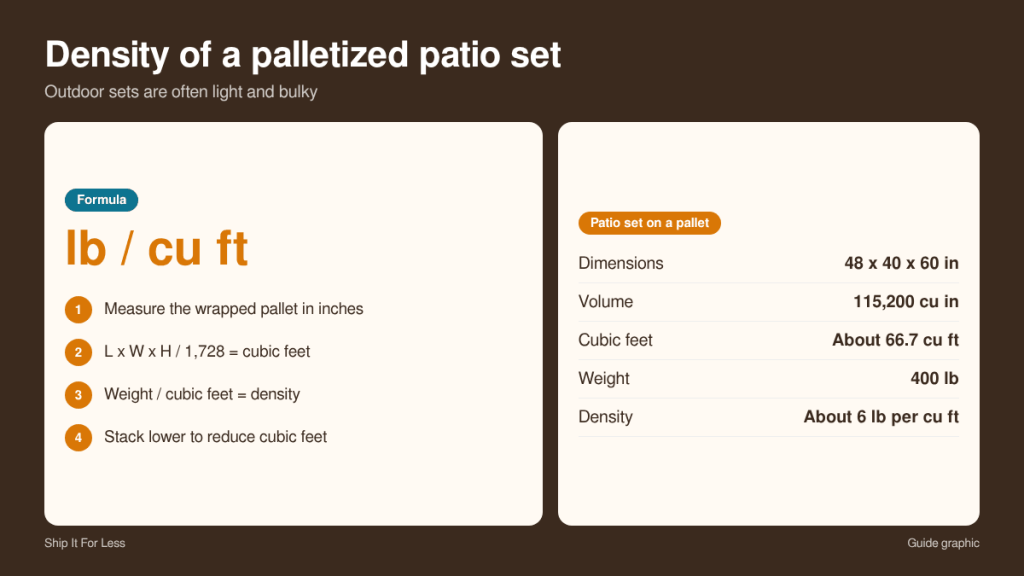
Example density check
A palletized patio set measuring 48 x 40 x 60 inches is 115,200 cubic inches, or about 66.7 cubic feet. At 400 pounds, that is a density of about 6 pounds per cubic foot. Light, bulky outdoor sets often have low density, which is why careful stacking to reduce height can make a difference under the density-based NMFC system that has applied since July 19, 2025.
Common mistakes to avoid
- Packing cushions damp. Even slightly damp foam can smell of mildew after a few days in a closed trailer, especially in hot weather.
- Leaving glass in the frame. A glass top that rides in its table frame takes every bump through the legs. Remove it every time.
- Forgetting hidden fuel. Small propane canisters for heaters, lanterns or torches are easy to overlook in a storage bin. Check every box.
- Underestimating size. A sectional that looks compact on a patio can take up a lot of trailer space once padded. Measure after wrapping, not before.
- Stacking heavy on light. Cast iron bases or stone tops placed on top of wicker or resin chairs will crush them. Heavy goes on the bottom.
- Skipping the hardware bag. Patio hardware is often specialized and rust resistant. Losing it can mean waiting for replacement parts.
A quick final walk around the pallet before pickup, checking labels, straps and the inventory list, catches most of these problems while they are still easy to fix.
Delivery day
- Request a liftgate for residential deliveries, since homes rarely have a dock.
- Arrange for the pallet to be placed in a driveway or garage. Standard delivery is usually curbside.
- Inspect the wrap and pallet before signing. Note torn wrap, crushed corners or visible damage on the delivery receipt.
- Unpack promptly, check each piece against your inventory, and report concealed damage to the carrier quickly with photos.
- Reassemble with the bagged hardware and buy a fresh propane cylinder locally.
Frequently asked questions
Can I ship a propane tank with my grill?
Generally no. Propane cylinders are regulated hazardous materials and carriers usually will not accept them with household goods. Remove the tank and replace it at the destination.
Should I ship patio cushions separately?
Yes. Dry them fully, bag them and box them separately so they stay clean and do not trap moisture against frames.
Is outdoor furniture cheap to ship?
It depends on size, weight and distance. Bulky, light sets often have low density, so compact stacking and disassembly help control cost.
How do I keep a glass patio table from breaking?
Remove the glass, tape an X across it, wrap it in foam, and ship it on edge in a mirror box or crate.
Moving a patio set or grill?
Freight shipping in Houston for outdoor furniture and grills can include palletizing and crating, so every piece arrives together.